Avocado sits at a funny crossroads of biology and myth-making. It’s a fruit that behaves like it’s auditioning for a philosophy class: a single giant seed, a buttery flesh, and a botanical history that borders on the absurd.
In ecological terms, avocado is an evolutionary ghost. Its seed is far too large for any modern animal to swallow and disperse. The most plausible working theory is that it evolved alongside now-extinct megafauna—giant ground sloths, gomphotheres, creatures large enough to gulp it down whole and carry the seed across ancient forests. When those animals vanished, the avocado should have been doomed. Humans stepped in as surrogate megafauna, planting and grafting it into survival.
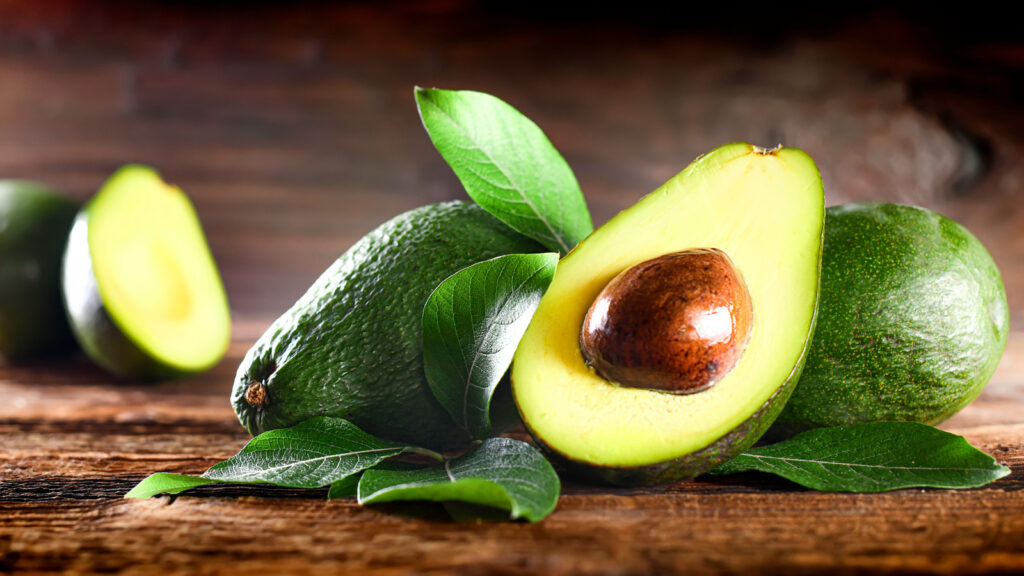
From a nutritional perspective, it breaks the usual fruit script. Most fruits are sweet sugar-bombs meant to lure animals; avocado is a fat delivery system. Monounsaturated fats—mostly oleic acid—give it that creamy texture and make it unusually caloric for a fruit. The tree puts a lot of biological energy into each fruit, which is why commercial avocado farming can be a water-intensive endeavor.
And agriculturally? It’s clever but temperamental. It needs well-drained soils, dislikes root disturbance, and prefers climates without frost. The flowers have a peculiar synchronized gender-switching schedule called “dichogamy,” where each blossom opens first in one sexual phase and then reopens later in another. This strange temporal choreography encourages cross-pollination and helps explain why orchards often mix “A-type” and “B-type” varieties.
The universe loves an oddball, and avocado is a prime specimen. If you want, we can dive into cultivation, health science, global trade quirks, or even the tree’s unlikely evolutionary companionship with vanished megabeasts.
Here is a concise but comprehensive overview of Avocado tailored for agribusiness, agroforestry, and plantation-management contexts. If you need a full business plan, crop guide, or a market study, I can expand further.
Avocado (Persea americana) – Technical & Agribusiness Overview
1. Botanical & Agricultural Profile
- Scientific Name: Persea americana
- Family: Lauraceae
- Types/Varieties:
- Hass (global standard; highest market value)
- Fuerte
- Wurtz / Dwarf Wurtz
- Carmen-Hass
- West Indian types (more heat-tolerant, larger fruits, thinner skin)
- Growth Habit: Medium-sized evergreen tree, 10–15 meters tall.
- Climate Requirements:
- Prefers subtropical to tropical highland climates.
- Optimal elevation: 600–1,800 masl (depending on variety).
- Optimal temperature: 15–28°C.
- Sensitive to strong winds and prolonged flooding.
- Soil Requirements:
- Well-drained, loamy or sandy-loam soils.
- pH: 5.5–7.0.
- Avocado cannot tolerate waterlogging; requires raised beds or sloping land for drainage.
2. Production Characteristics
- Planting Density:
- Traditional: 100–150 trees/ha.
- High-density systems: 250–400 trees/ha (requires strict pruning).
- Time to First Harvest:
- Grafted trees: 2.5–3 years.
- Seedling trees: 5–7 years.
- Peak Yield:
- 7–12 years after planting.
- Average Yield:
- Hass: 8–20 tons/ha annually depending on management.
- Fertilization & Inputs:
- High demand for N, Ca, and K.
- Responsive to organic fertilizers, compost, humic acids, and mycorrhizae.
3. Major Pests & Diseases
- Pests:
- Avocado lace bug
- Fruit borers
- Scales and mites
- Diseases:
- Root rot (Phytophthora cinnamomi) – the most destructive
- Anthracnose
- Stem canker
- Integrated Management:
- Good drainage, resistant rootstocks, mulching, and organic amendments are critical.
- Regular pruning improves airflow and disease control.
4. Market Outlook & Value Chain
- Global Demand Drivers:
- Healthy fats (monounsaturated)
- Cosmetic industry demand
- Food service and premium fruit markets
- Top Import Markets:
- U.S., Europe (EU), China, Japan, Middle East
- Price Range (international):
- Fresh Hass: USD 1.2–3.5/kg depending on season and quality.
- Premium organic Hass: up to USD 4.5/kg.
- Value-Added Products:
- Cold-pressed avocado oil (food-grade and cosmetic-grade)
- Cosmetic extracts
- Guacamole, puree, frozen pulp
5. Avocado as a Plantation / Agribusiness Venture
Advantages:
- Strong global demand; year-round consumption.
- Premium export crop with high farmgate value.
- Works well in agroforestry systems (intercropping with banana, cacao, coffee).
- Long-term perennial asset with rising price trends.
Challenges:
- Sensitive to flooding and root rot.
- Requires technical pruning and canopy management.
- Market entry for fresh export is strict (packhouse, cold chain, GAP standards).
6. Integration with Crown Agroforestry Group (if applicable to your ventures)
Avocado can be positioned as:
- A commercial fruit crop under CAPI agroforestry estates.
- An additional high-value tree crop to diversify plantations.
- A raw material for future Crown Extraction or wellness-product lines (avocado oil extraction).
- A climate-smart agroforestry asset offering carbon sequestration.
Climate & Location Requirements
- Temperature: Ideal range 15°C–30°C (59°F–86°F)
- Elevation: Grows well at 800–2,500 meters above sea level
- Rainfall: Prefers 1,000–1,500mm annually; needs good drainage
- Soil Type: Well-drained, loamy, or sandy soil with pH 5.5–7.0
- Sunlight: Requires full sun exposure for healthy fruiting
Propagation & Planting
- Best method: Grafted Hass avocado seedlings (fruit in 3-4 years)
- Planting distance: 5m x 5m (400 trees per hectare)
- Hole preparation: 50cm x 50cm x 50cm deep with compost
- Planting season: Best in the rainy season for root establishment
Irrigation & Water Management
- Young trees: Water 2-3 times per week
- Mature trees: Water weekly (reduce during fruiting)
- Drip irrigation recommended for water efficiency
Pruning & Canopy Management
- Prune after harvesting to maintain manageable height (3-4m)
- Remove dead branches to improve airflow and reduce disease risk
- Maintain an open center canopy for better sunlight penetration
Fertilization & Soil Health
Year 1-2: Apply NPK (10-10-10) every 3 months
Year 3+: Use organic compost + potassium (K) for fruit development
Add dolomite lime if soil is too acidic
Mulch around trees to retain moisture & improve soil health
Pest & Disease Management
- Common Pests: Thrips, mites, borers – use neem oil or organic sprays
- Diseases: Root rot (caused by Phytophthora) – ensure good drainage
- Fungal issues: Use copper-based fungicides for prevention
Flowering & Pollination
- Hass avocado has Type A flowers (opens female in the morning, male in the afternoon)
- Plant Type B avocados (e.g., Fuerte) nearby to increase pollination
- Bees & wind help improve fruit set
Harvesting & Yield
- First harvest: 3-4 years after planting (if grafted)
- Peak production: 8-10 years
- Annual yield: 150-300 fruits per tree
- Harvest timing: When skin turns dark green to black
- Post-harvest: Store at 5-7°C for longer shelf life
Market Potential & Profitability
- High demand for fresh & processed avocado products
- Suitable for local & export markets (Hass is an export-grade variety)
- Can be processed into avocado oil, puree, and guacamole