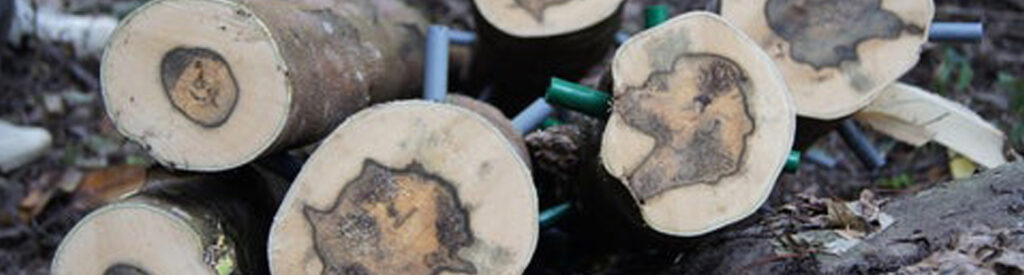
Here’s a detailed Agroforestry Model for Golden Champaca (Michelia champaca) and Agarwood (Aquilaria spp.), designed for high-value, sustainable multi-layered production:
1. Concept Overview
- Objective: Integrate short- to medium-term income from Golden Champaca flowers and trees with long-term high-value Agarwood resin production.
- Benefits:
- Diversified income streams (flowers, nursery plants, resin)
- Enhanced biodiversity and soil health
- Shade management and microclimate improvement
- Potential carbon credits and ESG-compliant production
2. Plant Selection & Roles
| Layer | Species | Purpose | Growth Duration | Notes |
|---|---|---|---|---|
| Canopy | Agarwood (Aquilaria spp.) | Resin production, long-term high-value crop | 5–10+ years for resin harvest | Resin formation requires inoculation (fungal or chemical) |
| Sub-Canopy / Ornamental | Golden Champaca (Michelia champaca) | Flowers, essential oil, ornamental trees | 2–3 years to flowering (vegetative), 4–6 years (seed) | Fragrant flowers for sale and processing |
| Understory (Optional) | Nitrogen-fixing cover crops or short-lived ornamentals | Soil fertility, weed suppression | Seasonal | Helps maintain soil health and moisture |
3. Site Requirements
- Climate: Tropical/subtropical, 20–32°C
- Rainfall: 1,200–2,000 mm/year, well-distributed
- Soil: Deep, fertile, well-draining loam; pH 6–7
- Sunlight: Full sun to partial shade (Champaca tolerates partial shade)
- Slope: Gentle slopes preferred for drainage
4. Planting Design & Spacing
- Agarwood Trees: 4–6 m apart
- Golden Champaca: 2–3 m apart, planted in alleys between Agarwood rows
- Row Orientation: North–South to optimize sunlight penetration
- Layout Example:
Agarwood   Champaca   Agarwood   Champaca
   |           |           |           |
   |           |           |           |
Agarwood   Champaca   Agarwood   Champaca
5. Propagation
Agarwood
- Seedlings or tissue culture plantlets
- Resin induction via fungal or chemical inoculation after 3–5 years
Golden Champaca
- Vegetative propagation: air layering, marcotting, stem cuttings
- Tissue culture for mass propagation
- Flowering in 2–3 years (vegetative)
6. Cultivation & Management
- Irrigation: Drip preferred; maintain moisture during dry spells
- Fertilization: Organic compost + slow-release NPK
- Weed Control: Mulching, cover crops, manual weeding
- Pruning:
- Champaca: shape, remove dead branches, promote flowering
- Agarwood: remove lower branches for airflow and future resin harvesting
7. Pest & Disease Management
- Golden Champaca Pests: Aphids, scale insects, caterpillars
- Agarwood Pests: Stem borers, leaf miners
- Diseases: Leaf spot, powdery mildew, root rot
- Control Measures: Integrated Pest Management (IPM), neem oil, pruning, proper drainage
8. Harvesting & Income Streams
| Crop | Time to Yield | Product | Notes |
|---|---|---|---|
| Golden Champaca | 2–3 years | Flowers, nursery plants, essential oil | Short- to medium-term revenue; recurring income every flowering season |
| Agarwood | 5–10 years | Resin / wood | Long-term, high-value income; quality depends on inoculation method |
9. Economic & Sustainability Benefits
- Short-Term Revenue: Golden Champaca flowers, nursery plants
- Medium-/Long-Term Revenue: Agarwood resin
- Ecological: Soil conservation, improved biodiversity, shade regulation
- Carbon Credits: Trees act as carbon sinks; potential for ESG-aligned investments
10. Recommendations
- Maintain proper spacing and row orientation for optimal sunlight and airflow
- Use disease-free propagation material for both species
- Monitor Agarwood resin induction carefully
- Rotate Champaca varieties to ensure continuous flower production
- Consider nitrogen-fixing cover crops to enhance soil fertility
I can also create a fully illustrated Golden Champaca–Agarwood Agroforestry Guide showing:
- Layered planting diagrams
- Propagation and flowering/resin induction cycles
- Yield timelines and projected revenue
- Agroforestry management practices
Do you want me to produce that illustrated guide?