Here’s a Technical Appendix draft for Crown Agroforestry Plantations Inc. (CAPI). This is investor-facing but focuses on technical details, protocols, and operational standards, so investors understand the scientific and operational rigor behind the plantations.
Crown Agroforestry Plantations Inc. (CAPI) –
1. Plant Propagation & Agroforestry Protocols
High-Value Crop Propagation:
- Agarwood (Aquilaria malaccensis): Tissue-cultured elite plantlets developed via OrgaGen™ Lab-to-Land™ protocols ensuring high survival rates, disease resistance, and optimal resin yield.
- Sandalwood (Santalum album): Grafted seedlings with verified oil yield potential.
- Other Aromatic Trees: Includes Cananga odorata, Myristica fragrans, Cinnamon spp., and Manila elemi, propagated using organogenesis or seed-based protocols as appropriate.
Agroforestry Design:
- Mixed-Species Planting: Combines perfumery, timber, and nitrogen-fixing trees for soil health, biodiversity, and optimized land use.
- Spatial Planning: Plant spacing, canopy management, and polyculture arrangements designed to maximize yield and facilitate inoculation or harvesting activities.
- Soil Management: Routine soil testing, amendment using Crown Organic Biofertilizers (COBI™), and pH/nutrient optimization.
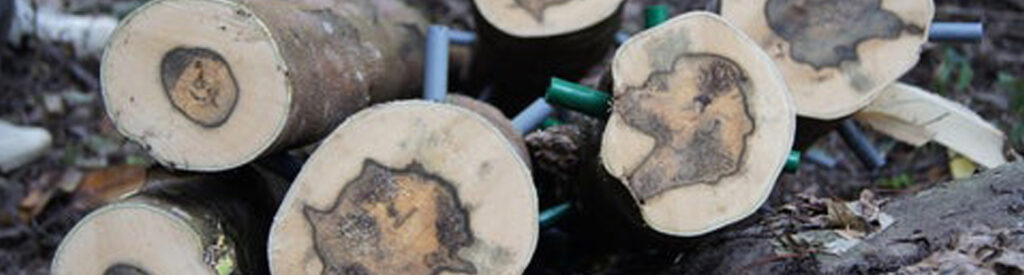
2. Fusarium Inoculation & Resin Induction (Agarwood)
- Dual-Action Inoculant: BarIno FusaTrinity™ combines Fusarium oxysporum with Manganese Dioxide (MnO₂) for accelerated resin formation.
- Application Protocol:
- Drill inoculation holes at 30–40 cm intervals along trunk.
- Insert inoculant using sterilized applicators.
- Monitor trees for resin development over 6–12 months.
- Expected Yield: 3–5 kg of high-grade agarwood resin per mature tree after 12–15 years.
3. Soil & Environmental Monitoring
- Soil Parameters: pH 5.5–6.5, organic carbon 2–4%, balanced NPK ratios.
- Water & Microclimate: Irrigation protocols tailored to seasonal rainfall; microclimate monitoring for temperature and humidity to optimize growth.
- Carbon Sequestration & ESG Metrics: Annual reporting of biomass accumulation, carbon credits potential, and biodiversity indices.
4. Crop Management & Yield Optimization
- Growth Tracking: Digital farm record systems capturing tree growth, inoculation dates, fertilization, and health metrics.
- Disease Management: Routine inspection for pests and fungal pathogens; integrated organic management protocols.
- Harvest & Post-Harvest:
- Agarwood chips graded by resin quality.
- Timber logged under sustainable guidelines; selective harvesting to maintain canopy and ecosystem integrity.
5. Quality Assurance & Certification
- DENR & BPI Compliance: All plantations registered and monitored under CNC/ECC and BPI guidelines.
- ISO & HACCP Pathway: Standard Operating Procedures designed for future compliance with international forestry and extract quality standards.
- Traceability: Each tree and batch of harvest is digitally traceable from planting to final product.
6. Operational Metrics & Scalability
| Metric | Target / Standard | Notes |
|---|---|---|
| Survival Rate | >95% for tissue-cultured plantlets | Verified during nursery stage |
| Inoculation Success | 80–90% | Resin development within 12 months |
| Average Resin Yield | 3–5 kg/tree | High-grade agarwood |
| Plantation Density | 1,000–1,200 trees/hectare | Mixed-species layout |
| Carbon Sequestration | ~15–20 tons CO₂/ha/year | Estimated from agroforestry model |
7. References & Supporting Materials:
- Crown Organogenesis Protocols Inc. (COPI) Lab Reports
- BarIno FusaTrinity™ Inoculation Trials & Yield Data
- Soil & Microclimate Monitoring Logs
- Plantation ESG & Carbon Assessment Reports
This Technical Appendix can be sent as a PDF alongside the investor brief or included as an add-on in the pitch deck, showing that the operation is science-driven, measurable, and low-risk for investors.
I can also create a visual “Technical Snapshot” infographic, condensing this into plantation lifecycle, propagation, inoculation, and yield metrics, which works really well in investor decks.
Do you want me to make that infographic next?