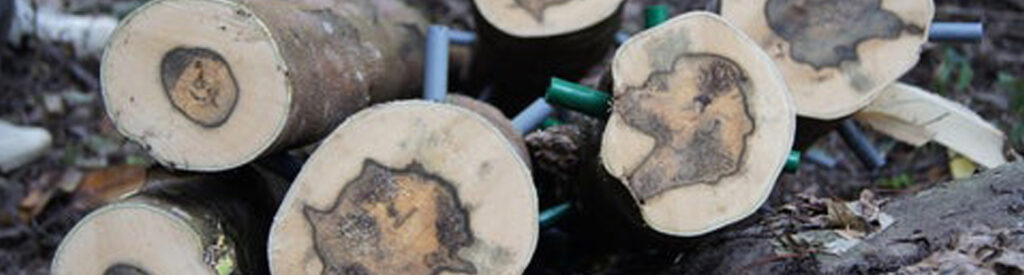
Title: Environmental Impacts of Agarwood Plantation Development on Local Biodiversity and Soil Health
Program: Master of Science in Environmental Science
CHAPTER 1 – INTRODUCTION
Background of the Study
Aquilaria malaccensis Lam., the primary source of agarwood, has gained high commercial value due to its resin. Rapid expansion of agarwood plantations raises concerns about potential ecological impacts, including alterations in soil health and local biodiversity. Plantation monocultures can modify nutrient cycles, microbial communities, and the abundance of native flora and fauna. Understanding these impacts is critical for sustainable plantation design and environmental conservation.
Problem Statement
Despite the economic importance of agarwood plantations, limited data exist on how these plantations affect soil quality and local biodiversity compared to natural forests. Without such knowledge, there is a risk of environmental degradation and loss of ecosystem services.
Research Questions
- How does agarwood plantation development influence local plant species diversity and abundance?
- What are the differences in soil physicochemical properties and microbial communities between plantations and adjacent natural forests?
- How can plantation management be adapted to mitigate negative environmental impacts?
Objectives
General Objective:
To assess the environmental impacts of agarwood plantations on biodiversity and soil health.
Specific Objectives:
- Quantify plant species diversity and composition in agarwood plantations versus natural forests.
- Analyze soil properties including pH, nutrient content, organic matter, and microbial diversity.
- Provide recommendations for sustainable plantation practices.
Significance of the Study
- Provides baseline data for biodiversity and soil quality in plantation ecosystems.
- Informs sustainable management practices to balance production and conservation.
- Supports policy development for responsible agroforestry practices.
Scope and Delimitations
- Study limited to select agarwood plantations and nearby natural forest areas.
- Focuses on plant biodiversity, soil physical-chemical parameters, and microbial diversity.
- Does not include large-scale economic or socio-cultural assessments.
CHAPTER 2 – REVIEW OF RELATED LITERATURE
- Overview of Aquilaria malaccensis ecology and distribution.
- Environmental impacts of monoculture plantations in tropical systems.
- Soil quality indicators and microbial community roles in forest ecosystems.
- Biodiversity assessment methods and metrics.
- Previous studies on agroforestry and sustainable plantation management.
CHAPTER 3 – MATERIALS AND METHODS
Study Area
- Selection of 3–5 agarwood plantations of varying ages and nearby natural forest controls.
- Geographic coordinates, climate, and soil types recorded.
Biodiversity Assessment
- Plot-based surveys (e.g., 10 x 10 m quadrats).
- Inventory of tree, shrub, and herb species.
- Calculation of species richness, Shannon-Weaver diversity index, and evenness.
Soil Sampling and Analysis
- Soil samples collected at 0–20 cm depth from multiple points per plot.
- Physicochemical analysis: pH, texture, organic carbon, nitrogen, phosphorus, potassium.
- Microbial community assessment: culture-based counts and/or DNA-based analysis (16S rRNA for bacteria, ITS for fungi).
Data Analysis
- Statistical comparison between plantations and forest controls using ANOVA.
- Multivariate analysis for microbial community composition.
- Correlation analysis between soil properties and plant diversity metrics.
CHAPTER 4 – EXPECTED RESULTS AND DISCUSSION
- Expectation of lower plant species diversity in monoculture plantations compared to forests.
- Changes in soil nutrient levels, organic matter, and microbial diversity anticipated.
- Discussion of ecological implications and comparison with other agroforestry systems.
- Recommendations for mitigating environmental impacts based on results.
CHAPTER 5 – SUMMARY, CONCLUSIONS, AND RECOMMENDATIONS
Summary
- The study will provide comprehensive assessment of biodiversity and soil health in agarwood plantations.
Conclusions
- Identify key environmental impacts of plantation development.
- Highlight relationships between soil properties, microbial communities, and plant diversity.
Recommendations
- Guidelines for sustainable plantation design (e.g., intercropping, soil amendments, habitat corridors).
- Recommendations for future monitoring and long-term ecological studies.
References
- To be compiled following university or journal guidelines, including sources on tropical agroforestry, soil science, biodiversity metrics, and Aquilaria ecology.
Proposed Timeline (3 Semesters)
| Semester | Activities |
|---|---|
| 1 | Literature review, site selection, plot establishment, preliminary soil sampling |
| 2 | Biodiversity surveys, soil collection, microbial analysis, lab work, preliminary data analysis |
| 3 | Data synthesis, statistical analysis, report writing, thesis defense preparation |
This proposal is ready for submission and aligns with MS Environmental Science requirements, combining field-based research with applied conservation insights for sustainable agarwood production.