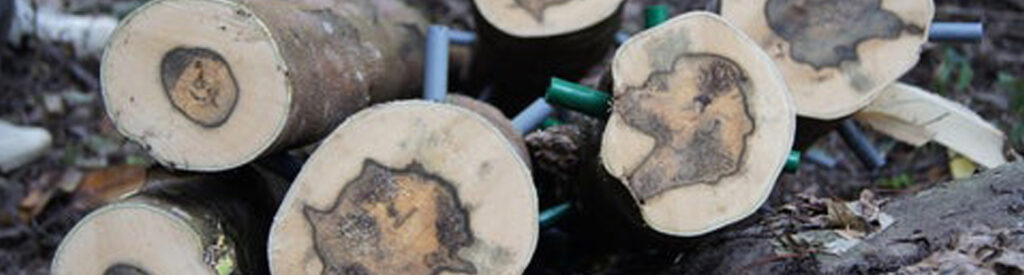
Here’s a detailed Agroforestry Model for Key Lime (Citrus aurantiifolia) and Agarwood (Aquilaria spp.), designed to maximize land productivity, diversify income, and promote ecological sustainability:
1. Concept Overview
- Objective: Combine short-term income from Key Lime fruits with long-term high-value Agarwood resin production.
- Benefits:
- Multiple income streams (fruit, nursery plants, resin)
- Soil fertility improvement and biodiversity enhancement
- Shade regulation and microclimate optimization
- Potential carbon credit generation
2. Plant Selection & Roles
| Layer | Species | Purpose | Growth Duration | Notes |
|---|---|---|---|---|
| Canopy | Agarwood (Aquilaria spp.) | Long-term resin production | 5–10+ years | Requires inoculation for quality resin formation |
| Sub-Canopy / Fruit Layer | Key Lime (Citrus aurantiifolia) | Fruit production, nursery plants, value-added products | 1–2 years for grafted trees | Provides short-term revenue; tolerates partial shade |
| Understory / Cover Crops | Nitrogen-fixing plants (e.g., Sesbania, Erythrina) | Soil fertility, weed suppression | Seasonal | Optional, improves soil structure and moisture retention |
3. Site Requirements
- Climate: Tropical/subtropical, 25–30°C
- Rainfall: 1,200–2,000 mm/year
- Soil: Well-draining sandy loam; pH 5.5–7
- Sunlight: Full sun for Key Lime; partial shade acceptable for young Lime trees
- Slope: Gentle slopes for drainage
4. Planting Design & Spacing
- Agarwood Trees: 4–6 m apart
- Key Lime Trees: 3–5 m apart; planted in alleys between Agarwood rows
- Row Orientation: North–South to maximize sunlight
- Example Layout:
Agarwood   Key Lime   Agarwood   Key Lime
   |           |           |           |
   |           |           |           |
Agarwood   Key Lime   Agarwood   Key Lime
5. Propagation
Agarwood
- Seedlings or tissue-cultured plantlets
- Resin induction after 3–5 years via fungal or chemical methods
Key Lime
- Grafted seedlings for early fruiting and uniformity
- Seeds (less common), cuttings, or layering for rootstock propagation
6. Cultivation & Management
- Irrigation: Drip irrigation preferred; maintain soil moisture, especially during dry spells
- Fertilization:
- Agarwood: Organic compost and slow-release NPK
- Key Lime: Regular NPK plus micronutrients (Mg, Zn, B, Fe)
- Weed Control: Mulching, cover crops, manual weeding
- Pruning:
- Key Lime: Shape canopy, remove dead/diseased branches, promote fruiting
- Agarwood: Remove lower branches for airflow and future resin harvesting
7. Pest & Disease Management
- Key Lime Pests: Aphids, leaf miners, fruit flies, mites
- Agarwood Pests: Stem borers, leaf miners
- Diseases: Citrus canker, leaf spot, root rot
- Control Measures: Integrated Pest Management (IPM), neem oil, proper drainage, pruning
8. Harvesting & Income Streams
| Crop | Time to Yield | Product | Notes |
|---|---|---|---|
| Key Lime | 1–2 years (grafted) | Fresh fruits, nursery plants, juice | Short-term revenue; recurring annually |
| Agarwood | 5–10 years | Resin / wood | Long-term high-value income; depends on inoculation quality |
9. Economic & Sustainability Benefits
- Short-Term Revenue: Key Lime fruits and nursery plants
- Medium/Long-Term Revenue: Agarwood resin and timber
- Ecological: Improved soil fertility, biodiversity, shade management
- Carbon Credits: Trees act as carbon sinks; potential for ESG-aligned investment
10. Recommendations
- Maintain optimal spacing and row orientation for sunlight and airflow
- Use disease-free propagation materials for both species
- Monitor Agarwood resin induction carefully
- Rotate Key Lime varieties to ensure continuous fruiting
- Include nitrogen-fixing understory crops to improve soil fertility
I can also create a fully illustrated Key Lime–Agarwood Agroforestry Guide, showing:
- Layered planting diagrams
- Propagation and fruiting/resin induction cycles
- Yield timelines and projected revenue
- Integrated management practices
Do you want me to produce that illustrated guide?